
Constant Upper Trap Tightness? Why Stretching Isn’t the Answer (and What to Focus on Instead)

Updated: May 5
For the first few years after having twins, constant upper shoulder (upper trap) tightness felt like my new normal. 🥴
As a Doctor of Physical Therapy, I knew all the “right” stretches to do and constantly asked my husband for shoulder massages, but honestly, I assumed the tightness would eventually go away on it's own once I stopped carrying babies/toddlers (and those ridiculously heavy car seats).
It didn’t.
And if you’re a busy professional spending hours at a computer each day, you might relate just as much - because this kind of chronic tightness isn’t just a “mom problem.” It’s incredibly common in adults navigating long workdays, stress, and sitting prolonged periods at a computer.
Before we go further, I want to be clear: There is still a place for short-term relief strategies. Gentle stretches, self-massage tools (like a TheraCane or vibrating massage gun) and treatments like cupping or DRY NEEDLING can be very effective - especially when muscle or fascial trigger points are driving your pain. They can reduce tension, improve mobility, and help you feel better quickly.
But if you’re only relying on those approaches, without addressing the underlying cause(s), the tightness will likely keep coming back.

Why Your Upper Traps Always Feel Tight
If you’re constantly stretching your neck and shoulders but the relief never lasts, there’s usually more going on beneath the surface.
Your upper traps often become overactive when:
Your breathing patterns rely too much on your neck and shoulders
You’re holding onto chronic stress or tension
Your mid-back (thoracic spine) lacks mobility
Your core, shoulder & cervical (neck) stabilizers aren’t doing their job
Your posture (especially at your desk or phone) reinforces these patterns
All of these factors played a role in my own recurring tightness. Between the physical demands of carrying and caring for twins, the postural habits that came with it, and lingering core weakness after pregnancy, my body adapted in ways that kept my upper traps working overtime. Add in less-than-ideal breathing patterns and a fair amount of life stress (because let’s be honest, twins + full-time work as a PT = a lot), and it was the perfect storm for chronic tension.
The takeaway: Chronically tight upper traps are rarely due to one thing, but rather a combination of factors that build over time. As you read through the sections below, start to consider which of these factors might be playing a role in your own pattern of tightness.

1. Optimize Your BREATHING Patterns
Many adults default to shallow, chest-dominant breathing, especially during stressful days.
The problem? This pattern overuses neck and upper shoulder muscles - keeping your upper traps in a constant state of tension.
What to do instead:
Practice 360° diaphragmatic breathing
Breathe in through your nose
Expand your lower ribcage (front, sides, and back)
Keep your upper shoulders relaxed
When bracing your core during exercise or when lifting something heavy: ➡️ Coordinate your brace with a controlled exhale.
2. Address STRESS + Hidden MUSCLE TENSION
Stress shows up in the body more than most people realize. For some, it’s acute stress from busy workdays, family responsibilities & constantly being on-the-go. For others, stressors can be more chronic and less obvious - holding onto tension patterns shaped by past experiences, unresolved emotions, or long-standing nervous system overactivation.
Either way, your body often responds the same: Increased sensitivity to pain & increased muscle tension (especially in the neck, shoulders, jaw & pelvic floor).
Step 1: Build awareness
Start checking in with your body throughout the day:
Are your shoulders creeping up?
Is your jaw clenched?
Are you holding unnecessary tension in any of your muscles?
Step 2: Reduce chronic tension (in a way that fits your individual needs)
Explore intentional stress management strategies and nervous system support and find what works best for you. Options include
Breathwork
Walking/getting outside in nature
Exercise
Mindfulness or journaling
Meditation or yoga
Connecting with friends or family
Engaging in an enjoyable hobby
Talking with a trusted professional
If you feel like your tension patterns go deeper, these resources can be helpful starting points:
The Body Keeps the Score by Bessel van der Kolk
Mind Your Body by Nicole Sachs
The Curable app (focused on chronic pain + nervous system retraining)
It might sound “woo” to some, but your body absolutely has to feel safe & supported in order to eliminate chronic muscle tension. If you’re someone who’s constantly in a go-go-go state, give yourself grace & accept that it’s not only okay, but NECESSARY for you to find small pockets of time to slow down & rest.
3. Improve THORACIC (Mid-Back) MOBILITY
Your thoracic spine plays a major role in both breathing and shoulder mechanics.
If your mid-back is stiff:
Your ribcage can’t fully expand
Scapula (shoulder blade) positioning is altered
Your primary shoulder joint (glenohumeral joint) has limited ability to reach overhead
Muscles like the upper traps compensate and do more work than they should
Some of my favorite thoracic mobility exercises:
Foam roller mid-back extension

Quadruped “thread the needle” rotation
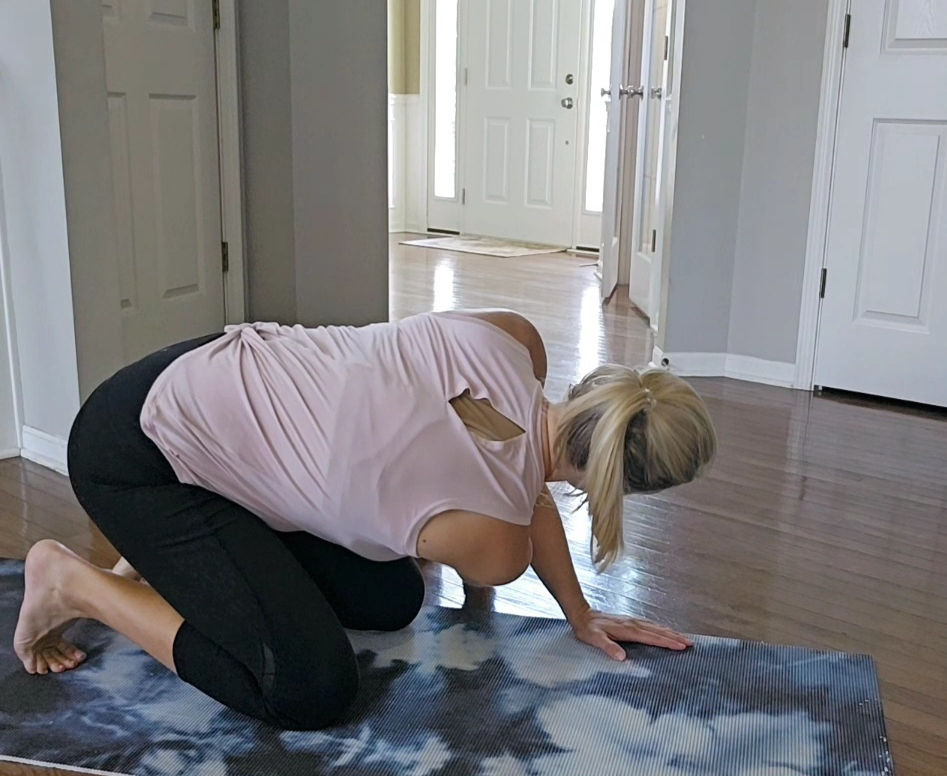
Quadruped rotation + extension

Standing rotation with opposite side bending

4. Build CORE + SCAPULAR STRENGTH
If you can’t properly brace your core, keep your ribcage & pelvis aligned or stabilize shoulder blade (scapula) movement with overhead reaching and lifting, your upper traps will be more than happy to compensate. Until they’re not.
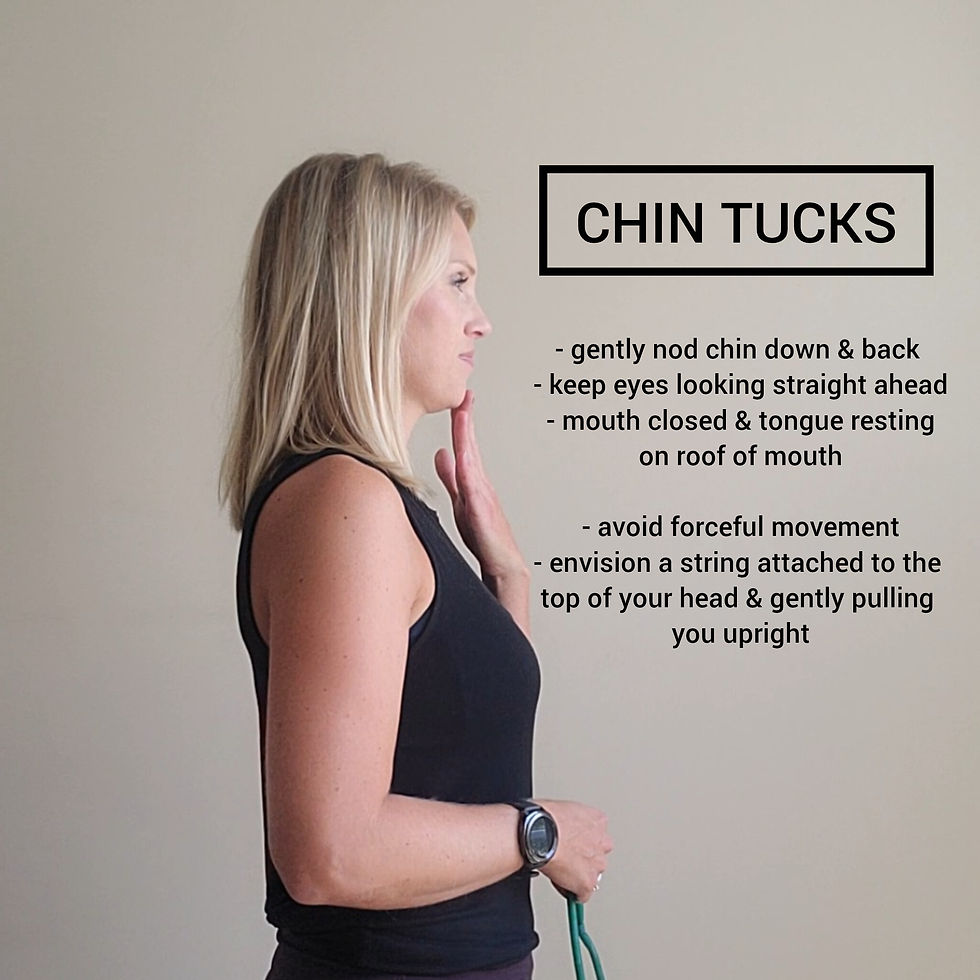
Another often-overlooked piece is the role of the deep cervical flexors - think of these as the “core muscles” of your neck. When these muscles are weak or inhibited, your body tends to rely more on the larger, more superficial muscles (like the upper traps) for stability. Over time, this compensation can contribute to ongoing tension and discomfort. This pattern is commonly influenced by factors like chronic postural strain, persistent pain, or even neurological considerations. In some cases, connective tissue conditions such as Ehlers-Danlos Syndrome (EDS), which can contribute to cervical instability, may also play a role.
I’ve not only observed this pattern of deep core & scapular weakness with myself after recovering from a twin pregnancy, but in countless clients over the last 17 years. Everyone’s needs are different, but here are some of my favorite beginning exercises to help restore core, scapular & deep cervical flexor strength:
Chin tucks
90/90 breathing + core brace (with feet on wall + ball/roller squeeze between knees)

Y’s to improve lower trap strength (either standing, lying on stomach OR bent-over supported at couch)

Supine serratus reach with alternating march (progressing to bicycle motion with legs)

Split stance resisted single-arm rows (ending in single-leg balance)

5. POSTURE Matters
Posture isn’t about being “perfect” - it’s about avoiding prolonged positions that keep muscles under strain.
Common postural habits that contribute to upper trap tightness:
Head pushed forward past shoulders
Prolonged time looking down at your phone or laptop
Excessively tilting your head to use bifocal glasses
Chin jutting forward
Slouched upper back
Instead, aim for:
Ears aligned over shoulders
Chin neutral to slightly tucked
Upper shoulders relaxed
Arms supported with elbows close to your body
Eyes looking straight ahead
If you wear bifocals, be mindful of how you adjust your head position to see clearly.
Instead of forcefully “fixing” your posture, imagine a string attached to the top of your head & gently pulling you upright. Aim for less tension & more ease.
The Bottom Line
If you’re constantly stretching your upper traps & using modalities for temporary relief, but not addressing WHY they’re tight, your symptoms will likely keep coming back.
True, long-term relief comes from:
Better breathing
Managing stress & addressing nervous system dysregulation
Improved thoracic mobility
Improved core, scapular & deep cervical strength
Coordinating mobility & strength for efficient movement patterns used in daily life (reaching, lifting, pushing, pulling, etc.)
Ready to Finally Get Rid of Upper Trap Tightness?
If this scenario of frequent upper shoulder tension & tightness sounds familiar, you don’t have to figure it out on your own!
Whether you’re a busy mom, a professional working long hours at a desk, or both - your body deserves a plan that actually works for you.
Schedule a free 15-minute consultation and let’s map out exactly what your body needs to move and feel better, for good.


Comments